Anne Smith | Chief Commercial Officer, [solidcore]
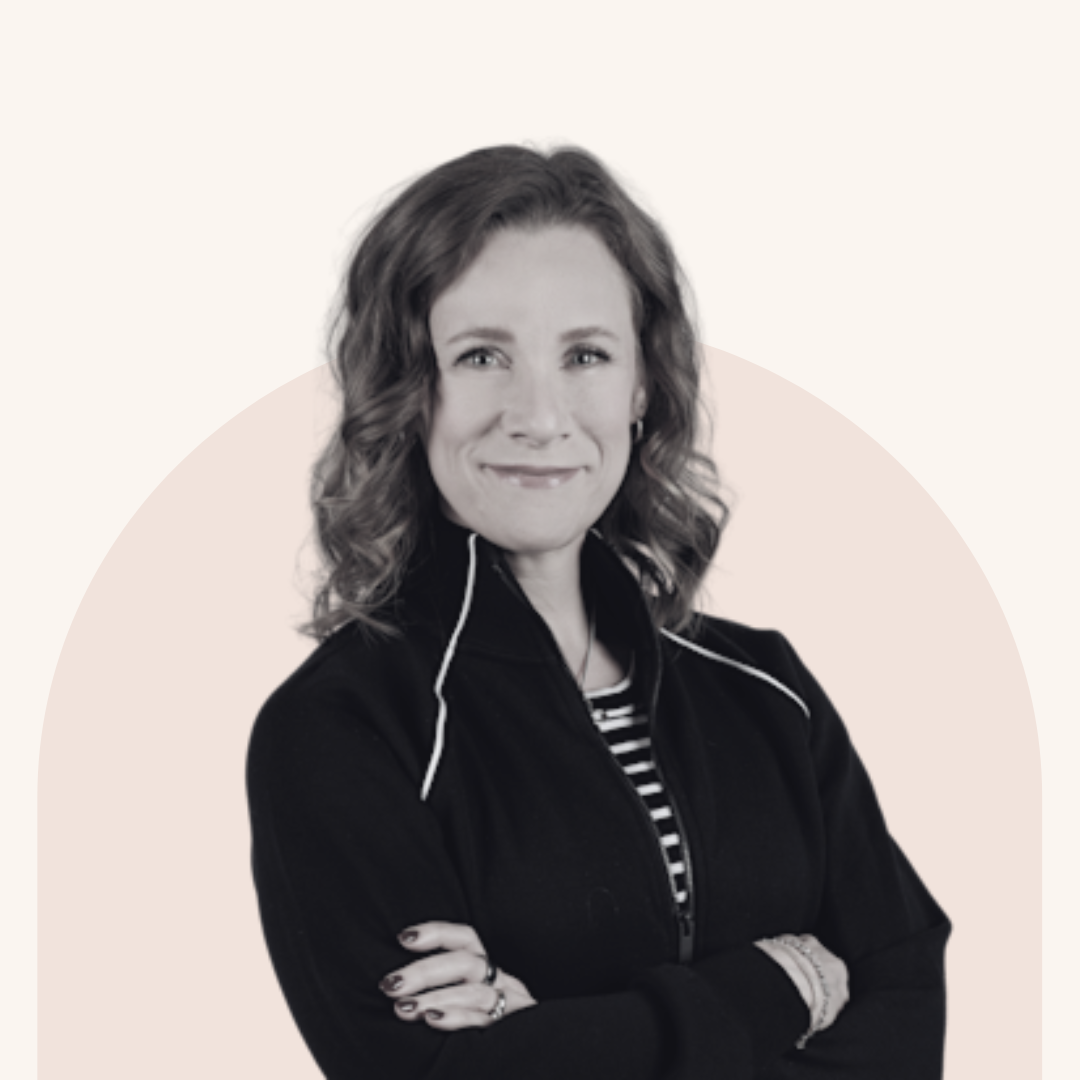
A conversation with Anne Smith, Chief Commercial Officer at [solidcore], on owning ambition without apology, leading growth through connection and purpose, and creating pathways for women to be recognized, heard, and fully supported as they rise.
Can you recall a time when things looked good on the outside but felt off inside? What helped you trust your own instincts again?
When I was in my late twenties, I was in a relationship that looked good on the surface, but was highly dysfunctional beneath. We had a large group of friends, all of whom would say "You are perfect together!" I felt pressure to try to believe what they saw, all while questioning and doubting on the inside. There was nothing outright abusive. I should have been happy. But I felt increasingly like this person was trying to control me. What I did, where I went, even how I spent my money. This was my silence. Silence the doubt. Make it work. You can fix this other person. You've always been able to see a way through...
I had lost my sense of empowerment. I withdrew from my family. I even started to withdraw from my friends so I could "focus on my relationship."
I didn't think anyone would understand why a "perfect couple" wasn't perfect. So, I found a therapist. The pretense was that I needed to work on myself so I could be a better partner. I had an objective listener who asked questions and encouraged me to journal and be introspective. I will never forget the session where the light bulb went off. I looked at her and said, "I can get out, can't I?" Suddenly, it was so clear that I was incredibly empowered. I had simply forgotten. I took control of my choices, extracted myself from the relationship, and I have never looked back.
If I hadn't found someone to help me break my silence, I don't know how I could have managed the shift that needed to happen.
Have you experienced a workplace where seemingly small dynamics gradually changed how safe you felt speaking up? What helped you reclaim your voice as a leader?
Early in my hospitality career, I was the only female VP on the executive leadership team. I had never been in such a lopsided environment. Now, having been raised that women can and should do anything, I initially took my minority in stride. Nothing could thwart my confidence or my belief in the value I had to offer. Over time, small experiences, micro aggressions one could say, started to erode my confidence. An interruption when I was expressing a POV. A reiteration of a point I made earlier and the resulting attribution to the male voice. When the leadership team expanded and two other women came on board, I watched the same thing happen to them. I started to notice I became more hesitant to use my voice--to ask a question, to bring forth an idea. I started feeling like a follower more than a leader. I did not feel the psychological safety to be fully myself. And then I started receiving contradictory feedback--you need to use your voice more / you're too combative.
That's when I advocated for an executive coach. Working with someone to help me navigate my environment helped me remember my strengths. She gave me tools so I could express my ideas without the female-softening-preamble. "Maybe this is a dumb idea, but..." turned into "I don't know this to be true, but here's what I think..." That small reframing unlocked my voice, and I carry that practice with me to this day.
What does meaningful support look like to you, and who has shown you the value of having someone who can both hold space for you and challenge you to grow?
I think I gravitate to people who are generous with sharing their own emotions, and so I can't pick out a single person. There have been colleagues, friends, and loved ones who have shown up in different ways. Sometimes it's someone who has sat quietly and listened while I process externally. The colleague who echoes my POV in a meeting where maybe the room was too quick to pass it over. Or it's someone who just knows when I need a hug.
If I had to pick one person, it would be a woman who was a direct report for nearly four years. She and I were excellent complements, valued each other's strengths, and had a high degree of trust and respect for one another. She and I stay connected and meet up every couple of months. One of the things that I have valued about her friendship is how she is 100% my champion, and also 100% my coach when I'm letting myself down. She provided excellent feedback when I was transitioning to a new role--how should I show up, how could I be authentic and still be "me," while I was stepping into a larger responsibility. Her ability to hold space for me is a grounding comfort.
What has navigating uncertainty alongside a team taught you about shared responsibility and asking for help through difficult moments?
A couple of years ago, I was in an organization that went through a very dramatic workforce reduction. It was long, drawn out, and it created a significant degree of uncertainty and insecurity across the company. When the final reductions were made, I had to communicate to my team of about 40 people--all but one who were women, as it happens--that all but four of their roles were eliminated, and that 13 new roles were created for which people could apply.
In this moment, we felt a shared grief across the team. We were tight, very supportive of one another, and we felt the impact as a unit as well as individuals--the emotional load was very much shared. Over the course of the next four weeks, teammates rallied. They reviewed each other's resumes. They conducted mock interviews. They used their connections across the company to identify possible roles in new departments. I back-channeled my ass off to position my team and advocate for placement in roles. Three leaders decided to leave the company with the severance offered, but everyone else wanted to stay. And I was able to place all but one leader.
Had we not had that shared emotional load, we would not have been able to support one another to that final outcome. This experience taught me so much about leadership and compassion and how to reframe "asking for help," especially when help can be so generously given.
Looking across the different moments when you've had to move beyond silence, what have those experiences taught you about finding—and continuing to use—your voice?
As I reflect on what I have shared today, I feel as if noticing and accelerating the shift away from silence is like earning one's stripes. It's never just once. And it's not isolated to personal or professional environments. All of the experiences, or stripes, has made me the leader and woman that I am today. I don't regret them or want to hide them away. I bear them proudly.
By sharing our stories, we strengthen each other. Stories are the fabric of the larger tapestry that will nurture the courage, tenacity, and self-confidence we all want to feel each and every day.
“By sharing our stories, we strengthen each other. Stories are the fabric of the larger tapestry that will nurture the courage, tenacity, and self-confidence we all want to feel each and every day.”
About Anne
I am an executive, wife, and mother, raised by a Southern mother and a father who wanted me to soar. Always academically driven, my all-girls school education led me to thrive in top institutions, including the Kellogg School of Management where I earned my MBA. I have grown through my career in marketing, brand, and strategy across packaged goods and the hospitality industry. Somewhere along the way I became a fitness instructor, and that passion led me to my position now, where my role combines everything I love with everything my education and experience has prepared me to lead.
Connect Further
Website: https://www.solidcore.co/ | LinkedIn: Anne Smith